People talk a lot about setting intentions, but let’s be honest—most of us don’t really know what makes them stick. The real purpose of intention is to tell your subconscious mind what matters, programming it to filter your world and line up your actions with what you truly want. If you skip this, intentions end up as empty wishes that disappear fast.
Your conscious mind can set all the goals it wants, but if your subconscious is running old scripts that say otherwise, you’ll stay stuck. I’ve seen it over and over with clients in spiritual hypnosis at Intuitive Clarity Hypnosis. People know exactly what they want, but their subconscious beliefs quietly block them. That’s why intention work has to go way deeper than just thinking positive thoughts.
Once you figure out how to set intentions your subconscious actually listens to, things start shifting. Suddenly your brain filters opportunities differently. Your body feels pulled to take action that makes sense. You stop fighting yourself and finally start moving toward your soul purpose with a kind of clarity you can feel in your bones.
Key Takeaways
- Intention is about programming your subconscious to filter reality and spark action that matches your real goals
- Conscious intentions fall flat if your subconscious is running the opposite story; that’s why hypnosis goes straight to the root for lasting change
- Intentions only work when you actually feel them in your body—emotion is the signal your subconscious trusts
Understanding Intention and Purpose
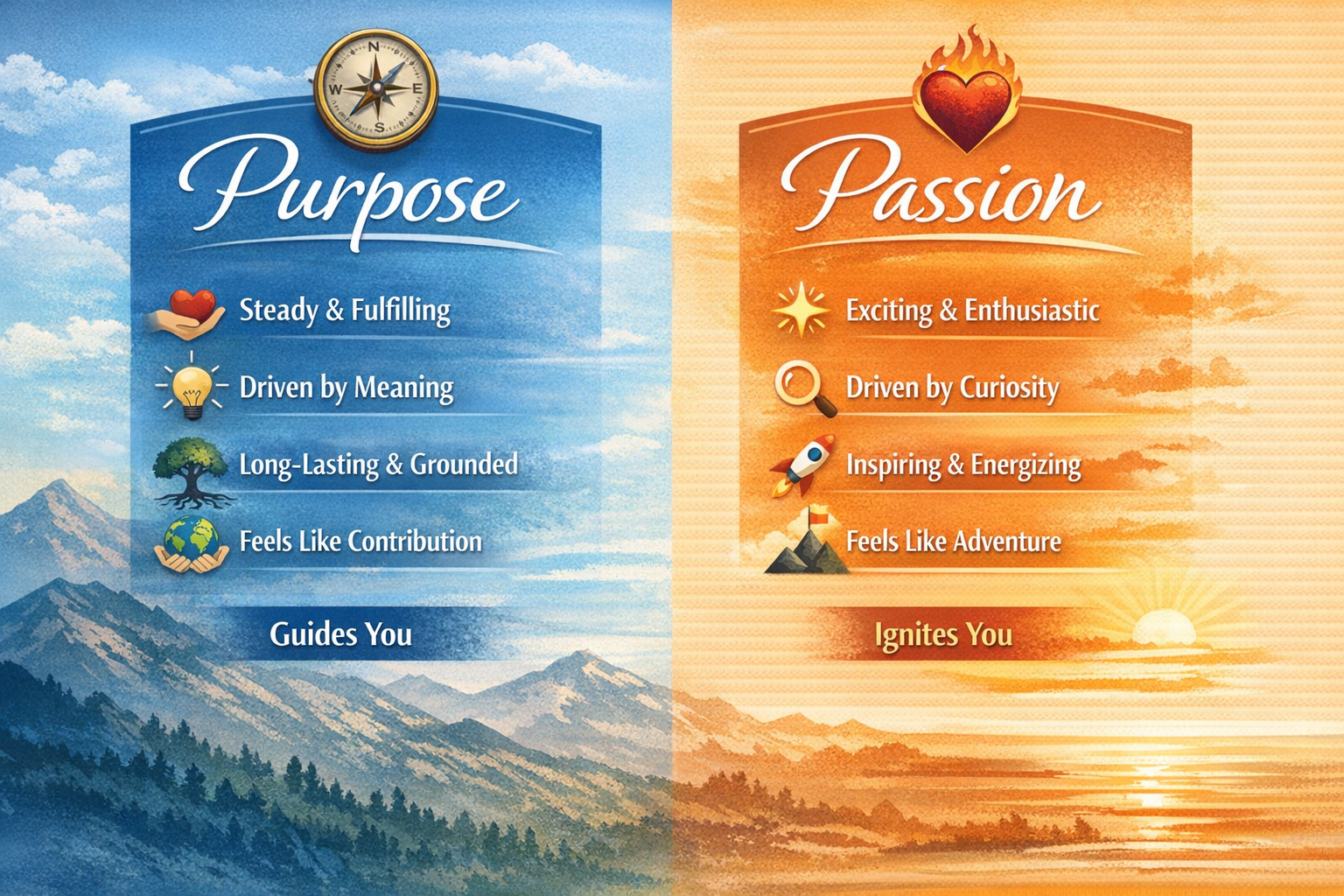
Intention is about what you want to do right now; purpose is the deeper why behind your actions. They work together, shaping both your daily choices and your spiritual practice.
Definitions of Intention and Purpose
Intention is the specific aim you hold before you act. When you set an intention, you’re focusing on a goal or outcome you want to reach. It’s about what you plan to do next.
Intention is the what you’re focusing on right now. Before a spiritual hypnosis session, your intention might be to relax or access a certain memory. That intention gives direction to your immediate actions.
Purpose, on the other hand, is deeper than any single goal. It’s the big-picture reason driving your choices and the meaning you find in your experiences. Maybe your purpose is to help others heal or to grow spiritually.
Purpose is your compass. Intentions shift day to day, but purpose stays steady and guides your intentions over time. When you discover your soul purpose through spiritual hypnosis, you start seeing which intentions actually fit your true path.
Distinctions Between Intention and Purpose
The real difference is scope and timing. Intention is about what you want to happen now; purpose is about the whole journey.
Think of intention as a step and purpose as the destination. You might set an intention to meditate every morning, but your purpose is the reason meditation matters—like connecting with your higher self or finding peace.
Intentions are concrete and specific, targeting things you can do in the short term. Purpose is more abstract and sticks with you for life.
You can have a bunch of intentions that all serve one purpose. If your purpose is spiritual growth, you might set intentions to practice hypnosis, read spiritual texts, or connect with like-minded folks. Each intention supports your bigger purpose, but isn’t the purpose itself.
Origins and Etymology
Intention comes from Latin for “to stretch toward.” Purpose is from Latin meaning “something set before you as an end.” Simple enough.
Intention and the Subconscious Mind
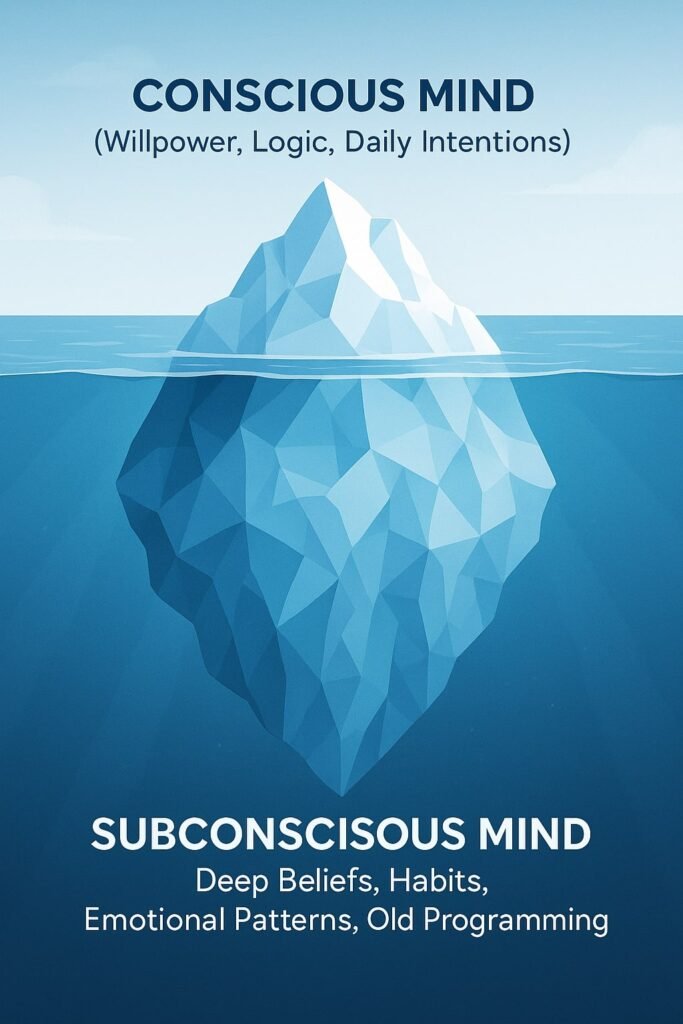
Your conscious intentions often clash with deep subconscious patterns you barely notice. When these two parts of your mind are at odds, your goals feel just out of reach—no matter how hard you try.
Why Willpower Isn’t Enough
Willpower comes from your conscious mind, but that’s only a tiny piece of the puzzle. Most of your choices, habits, and emotional reactions are run by your subconscious.
If you consciously want abundance but deep down believe money is stressful, or if you crave love but secretly feel unworthy, you’ll hit invisible walls. It’s frustrating, right?
The subconscious mind can trip up your best intentions, blocking you from what you want most. Old programming from childhood, past traumas, or just years of negative thinking can override your conscious desires without you even realizing it.
Using Hypnosis to Align Intention
Hypnosis is hands-down the most effective way to bridge the gap between what you consciously want and what your subconscious believes. In hypnosis, you bypass the usual mental chatter and get right to the root.
In that relaxed state, your subconscious is way more open to new ideas. You can plant intentions like seeds and watch them grow into real habits and beliefs. This is where you finally get your conscious and subconscious on the same team.
When I work with clients, we dig up those old, limiting subconscious beliefs that keep them stuck. Then we swap them out for beliefs that support their intentions. In hypnosis, you actually feel what it’s like to live your desired reality—emotionally, not just mentally. That’s the language your subconscious understands.
With regular hypnosis, the new neural pathways supporting your intentions get stronger. Your subconscious starts working with you, not against you. That’s when things really start to shift.
The Neuroscience of Intention
Setting an intention isn’t just woo—your brain literally gets to work. Specific brain systems light up to turn your commitment into focused action. Neural networks filter info, direct your focus, and help you make choices that fit your desired outcomes.
The Reticular Activating System (RAS)
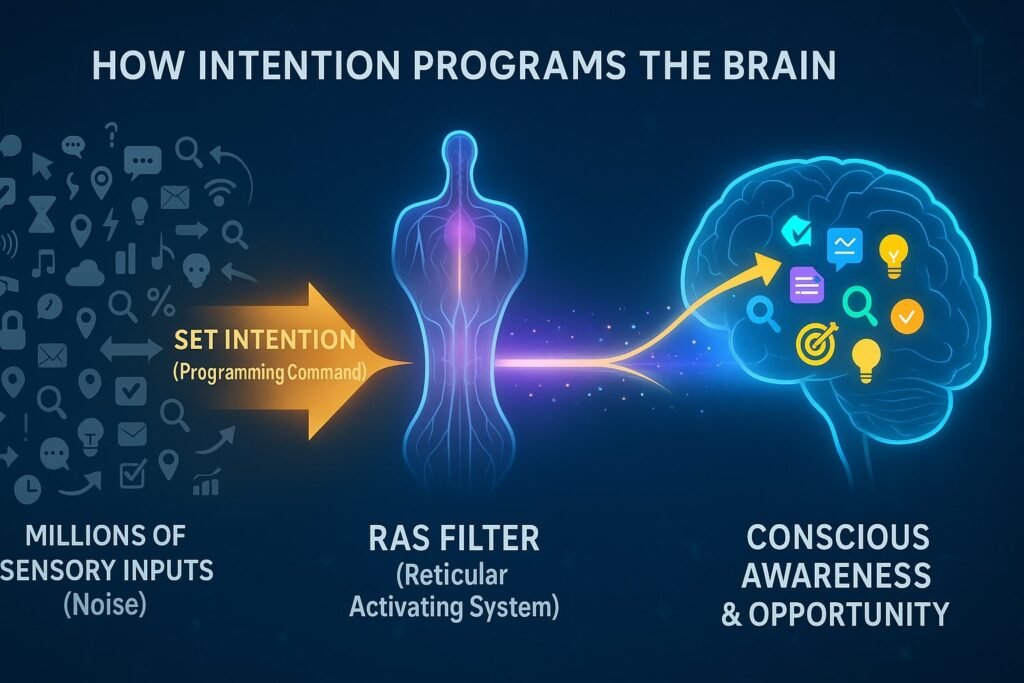
The RAS is a bundle of neurons in your brainstem. It’s basically your brain’s filter. Out of the millions of things you could notice, the RAS decides what actually gets through. When you set a clear intention, you’re giving your RAS new instructions—so it starts flagging opportunities and info that match your goal.
Your RAS doesn’t sleep. It’s always scanning for anything that lines up with your priorities and intentions. Ever notice how you suddenly see your new car everywhere after you buy it? That’s your RAS at work.
This system links up with your prefrontal cortex and limbic system, so your attention syncs with emotion and decision-making. Research shows intention involves different neural systems working together to decide what you do and when you do it.
How Intention Directs Focus
Your brain’s attention systems are always listening for your intentions. Commit to a goal, and your prefrontal cortex keeps that intention front and center. This primes other parts of your brain to get in line with your purpose.
Intention is like a command for your brain—it shapes what you see, feel, and do. Your neural pathways literally rewire themselves based on where you keep putting your attention. Neuroplasticity is real: the more you focus on something, the easier it gets for your brain to go there.
Your parietal and frontal lobes team up to control intentional focus. They filter out what doesn’t matter and boost what does, so your attention locks onto what helps you move forward.
Intentionality in Decision-Making
Different brain systems handle different pieces of intention. The prefrontal cortex weighs options and consequences. The basal ganglia help carry out your chosen actions. The anterior cingulate cortex keeps tabs on whether your actions match your intentions.
When your choices line up with your intentions, these regions work in sync. Sometimes your motor cortex even gets ready to act before you consciously decide. Brain scans show how frontal and parietal areas connect when you’re processing intention.
Intentions create a framework that shapes your choices on autopilot. Repeating intentional actions strengthens those neural pathways, so eventually, living your purpose starts to feel natural—not like a chore.
Purpose as a Guiding Principle
Purpose is your inner compass. It keeps you pointed toward what matters, helping you make decisions that actually fit your deepest values. It gives structure to your choices and lays the groundwork for long-term planning.
Purpose and Meaning
Purpose is what makes life feel meaningful. When you know your purpose, even the small stuff takes on new significance. Work isn’t just about checking boxes. Your relationships get deeper, because you show up with intention.
Purpose brings meaning and direction, especially when things get tough. It gives you a sense of consistency, no matter what life throws at you. You stop wondering if your efforts matter, because you know they’re part of something bigger.
Without purpose, it’s easy to drift or feel restless. With it, each day builds on the last, and you start to see real progress toward what you actually want.
Establishing Direction and Values
Purpose is the compass guiding you forward. It helps you figure out what matters most and shapes your core values. Once you know your purpose, you can plan your time and energy with more intention.
Your values flow from your purpose. If your purpose is to help others heal, you’ll naturally value compassion, patience, and growth. Those values shape both your daily choices and your bigger goals.
Direction comes from knowing your purpose. You get to ask, “Does this opportunity fit with what I’m really about?” That clarity makes it easier to say yes to what matters and no to what doesn’t. Your purpose becomes your measuring stick for every decision.
Interplay Between Intention and Purpose
Intention and purpose work together to create meaningful action in your life. When you really get how these two connect, you suddenly have the power to move forward with both direction and motivation. It’s like flipping a switch.
How Intention Supports Purpose
Your intention is the bridge between knowing your purpose and actually doing something about it. Intention is what you plan to do, while your purpose is the deeper “why” behind those plans.
Think of intention as your immediate commitment to act. When you set an intention during spiritual hypnosis sessions, you carve out a specific path toward your bigger soul purpose. It turns that overwhelming “what’s my purpose?” question into something you can actually work with, step by step.
Intentions give your purpose legs. Without them, your purpose just floats around—nice, but not real. With strong intentions, you actually live your purpose, not just think about it.
Aligning Goals and Objectives
Goals really come alive when they line up with both your intentions and your purpose. That’s when motivation feels natural, because your daily actions connect to what matters most to you.
Start by asking yourself about your bigger objective—why is this goal even here? Then look at whether your immediate intentions are really supporting that objective. If you’re dragging your feet or feeling drained, there’s probably a disconnect somewhere.
When I work with clients in spiritual hypnosis, we trace their goals back to their core purpose. It’s eye-opening. Suddenly, it’s clear which objectives feed their soul path and which ones are just there because someone else said they “should.”
Clarity and Resolve in Action
Clarity happens when you can name both what you want to do and why it matters. That combo strengthens your resolve to stick with it, even when things get tough.
Intention zooms in on the immediate outcome, while purpose speaks to the bigger meaning behind your actions. Holding both in your awareness? That’s where real momentum comes from. You know where you’re headed, and you know why it’s worth the effort.
Your resolve gets deeper as you realize how each small intention serves your larger purpose. It’s not just about ticking off boxes—it’s about building a life that actually feels right for you.
Practical Applications of Setting Intentions
Intention setting can totally shift how you move through your day—from your morning coffee to the biggest career decisions. It’s most powerful when you bring together a clear vision, real emotion, and small but steady daily actions.
Intentions in Daily Life
Try starting your morning by stating a simple intention for how you want to show up. Maybe it’s “I meet challenges with patience,” or “I really listen in conversations today.” These tiny statements shape your mindset and nudge your choices all day long.
Aligning your daily actions with your bigger values keeps you clear on what actually matters. You can set intentions for meetings, tough talks, or even family time—just make sure they mean something to you, not just another thing to cross off the list.
Intentions aren’t just for the short term. Weekly intentions help you stay on track with priorities, while monthly ones support bigger shifts in how you want to grow or what you want to invite into your life.
Techniques for Visualizing Your Intention
You build stronger neural pathways when you visualize your intention with real detail. Close your eyes and picture yourself living your intention—what do you see, hear, and feel in that moment?
Make your visualization first person, as if you’re right there, not just watching yourself from a distance. Bring in colors, sounds, even the way your body feels. The more vivid, the more your mind buys in.
Write your intention down and stick it somewhere you’ll see it often. Some people make vision boards or set digital reminders. The repetition is what gets your subconscious to start spotting opportunities that match your intention, often when you least expect it.
The Role of Emotion
Your intentions only really take off when you connect them to genuine feeling. Ask yourself—why does this intention matter to me? What’s it going to feel like when I’m actually living it? Let that feeling move through your body as you state your intention.
Good intentions with zero emotion? They fizzle out fast. You’ve got to feel the desire, not just think about it. Emotion is energy in motion—it’s the signal your subconscious actually understands.
Want to make that emotional link stronger? Remember a time you already lived out part of your intention. Bring up that feeling again, right now. It’s a powerful way to bridge the gap between where you are and where you want to be.
Intention as a Catalyst for Growth
Setting clear intentions gives you a framework that pushes you past your old limits. Suddenly, you start to see yourself—and what’s possible—in a whole new light.
Breaking Through Limiting Beliefs
Your limiting beliefs are like invisible walls. They whisper things like, “I’m not good enough” or “That’s just not for me.” When you set intentions with purpose, you start poking holes in those walls.
Intentions help you spot your own patterns. Where is fear running the show? Where are you holding yourself back? Your intention becomes a tool to see what you really believe about yourself—and what you’d rather believe instead.
This means getting honest about the beliefs that just don’t fit anymore. Some of them probably came from old experiences that have nothing to do with who you are now. As you work with intentions for growth and achievement, you create room for something new.
Every time you reconnect to your purpose, your intention acts as a counterweight to the old negative self-talk. You’re reminding yourself of where you want to go, not just where you’ve been stuck.
Expanding Goals and Personal Development
Your goals get a lot more interesting when they’re tied to deeper intentions. Instead of just wanting to achieve something, you know why it matters. That “why” is what keeps you going.
Intentional goal setting drives real success because it keeps you focused on what actually matters to you. You stop chasing other people’s ideas of success and start building what feels right for you. That’s a huge shift in how you measure progress.
Your personal growth speeds up when intentions guide your choices. You get pickier about where your energy goes, and every step you take connects back to your larger purpose. Suddenly, your life feels a lot more coherent.
Stretching past your comfort zone? Way easier when you know why you’re doing it. With clear intentions, your growth is purposeful, not just random. You develop the skills you actually want, not just what someone else says you should.
Frequently Asked Questions
People have a lot of questions about working with intentions—how to pick what to focus on, how intentions shape relationships, or just how any of this fits into daily life. Here are answers to some of the most common things people wonder about.
What are some common intentions people set for manifestation practices?
People often set intentions for big life areas—health, relationships, career, personal growth, money. Maybe it’s “I attract abundance that matches my purpose,” or “I welcome loving relationships into my life.”
Health intentions might center on feeling vibrant and well. For career, it’s usually about finding meaningful work or hitting a specific goal.
Lots of intentions are about emotional states, too—like “I approach each day with gratitude,” or “I trust my intuition to guide me.”
What does it mean to have intentions with another person?
Having intentions with someone else means getting clear about what you want the relationship to look like. You’re honest about what you hope to create together, and how you want to show up for each other.
This works for romantic relationships, friendships, even business partnerships. You might set a shared intention like, “We communicate openly and respectfully,” or “We support each other’s growth.”
Clear intentions in relationships build trust and understanding. Both people know what’s up and can work toward the same goals.
Could you provide examples of how to effectively set intentions?
Effective intention setting starts with how you want to feel, or who you want to become. Write your intentions in the present tense, as if they’re already happening.
So instead of “I want to be more confident,” you’d say, “I move through challenges with calm and confidence.” That way, your mind starts to accept it as your reality now—not someday.
Make sure your intentions actually line up with your core values. If they don’t resonate with what matters most to you, they just won’t stick.
Strengthen your intentions by practicing them regularly. Review them during meditation, jot them in your journal, or repeat them as affirmations. It’s the regular practice that really makes them part of your life.
In what ways can setting positive or spiritual intentions impact daily life?
Setting intentions brings clarity and purpose to your everyday choices. When you’re clear about what you want, you start making decisions that actually line up with your deeper goals, instead of just drifting or reacting.
Intentions help you focus your energy on what truly matters. Suddenly, you notice more of the opportunities that resonate with your desires, and you’re less likely to get sidetracked by distractions that don’t really serve you.
Spiritual intentions can give you a sense of connection to something bigger—call it the universe, spirit, or just the collective energy around us. That bigger perspective? It helps you stay grounded, even when life gets rough.
And let’s not forget: your intentions shape how you show up with others. If you set out to be more patient or compassionate, you’ll probably catch yourself responding to people in a way that feels more aligned with who you want to be.
Ready to Align Your Subconscious with Your Intentions?
You now know that setting an intention is only the first step. If you feel like you are constantly “stretching” but snapping back to old patterns, your subconscious mind might be holding the brakes.
At Intuitive Clarity Hypnosis, I help you bypass the critical mind and reprogram those limiting beliefs directly at the source.