

Past life regression offers a unique window into understanding patterns and experiences that may influence your current life. While this therapeutic technique can provide valuable insights, the way you approach difficult memories or challenging emotions during a session greatly impacts your overall experience. Self-compassion serves as a powerful tool that allows you to face past life memories with kindness and acceptance rather than judgment or fear.
When you treat yourself with the same gentleness you would offer a good friend, you create a safe emotional space for deeper exploration during regression sessions. This compassionate approach helps you process difficult experiences without becoming overwhelmed by guilt, shame, or trauma from past lives. Research shows that self-compassion reduces emotional reactivity and increases your ability to learn from challenging experiences.
Understanding how to integrate compassion into your regression work can transform what might otherwise be a distressing experience into one of healing and growth. You will discover practical methods for cultivating self-kindness during sessions, learn to navigate emotional challenges with greater ease, and explore how this approach leads to more meaningful insights about your soul’s journey across lifetimes.
The Role of Self-Compassion in Past Life Regression
Self-compassion creates a safe mental space for exploring difficult memories and emotions that may arise during regression sessions. This approach helps you process challenging experiences with kindness rather than harsh self-judgment, leading to deeper healing and acceptance.
Understanding Self-Compassion and Its Principles
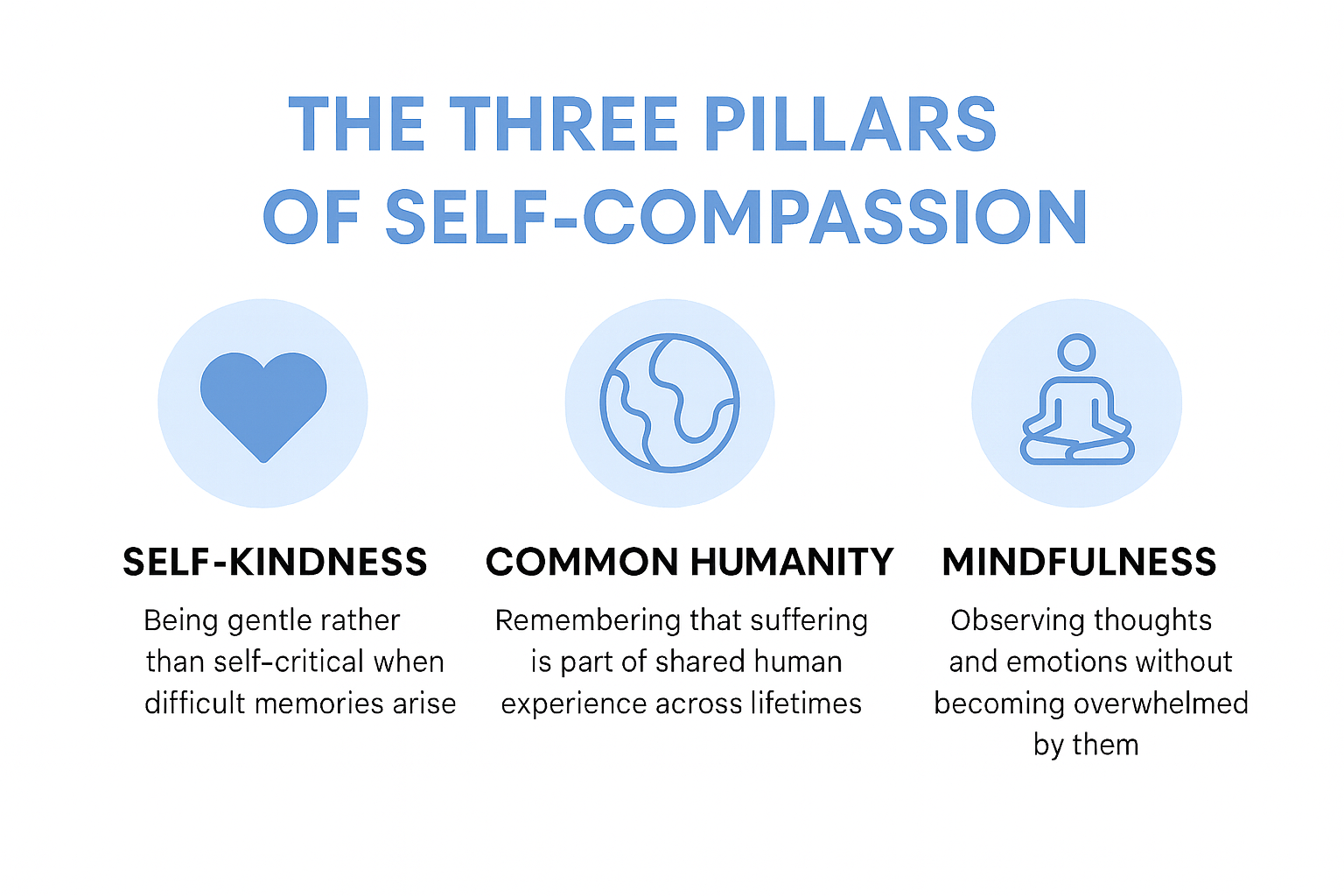
Self-compassion involves treating yourself with the same kindness you would show a good friend. It has three main parts: self-kindness, common humanity, and mindfulness.
Self-kindness means being gentle with yourself instead of harsh. When difficult memories come up during regression, you speak to yourself with care rather than criticism.
Common humanity helps you remember that suffering is part of human experience. You are not alone in having painful experiences across lifetimes. This understanding reduces feelings of isolation and shame.
Mindfulness involves observing your thoughts and feelings without getting lost in them. During regression, you notice emotions as they arise without being overwhelmed by them.
The Self-Compassion Scale (SCS) measures these three elements. Research shows that people with higher self-compassion have better mental health and well-being. They handle stress better and recover from difficult experiences faster.
Self-Compassion as a Foundation for Healing
Self-compassion creates the emotional safety needed for deep healing work. When you approach past life memories with acceptance, you can process them more fully.
Your nervous system stays calmer when you practice self-compassion. This allows you to access memories that might otherwise be too threatening to explore. Fear and self-judgment block the natural flow of information during regression.
Empathy toward your past life selves helps you understand their choices and circumstances. Instead of judging past actions, you can see the full context of those lifetimes. This understanding leads to forgiveness and release.
Self-compassion also helps you integrate lessons from past lives. When you treat yourself with kindness, you are more open to learning and growth. This creates lasting positive changes in your current life.
Addressing Self-Criticism and Negative Emotions During Regression
Self-criticism often arises when you encounter difficult past life experiences. You might judge past actions or feel shame about certain memories. These reactions can block the healing process.
When negative emotions surface, acknowledge them without resistance. Tell yourself that these feelings are natural responses to challenging material. This acceptance prevents the emotions from becoming overwhelming.
Practice speaking to yourself as you would to a loved one. If you feel critical thoughts arising, pause and ask what you would say to comfort a friend in this situation. Use those same gentle words with yourself.
Remind yourself that exploring past lives takes courage. You are doing important healing work that benefits your current life. This perspective helps counter self-judgment and maintains your motivation to continue the process.
Practical Techniques: Integrating Self-Compassion into Regression Sessions
Self-compassion training creates a safe emotional foundation for exploring past lives through specific mindfulness practices, hypnosis techniques, and exercises that help you approach your past self with understanding rather than judgment.
Guided Meditation and Mindfulness Practices
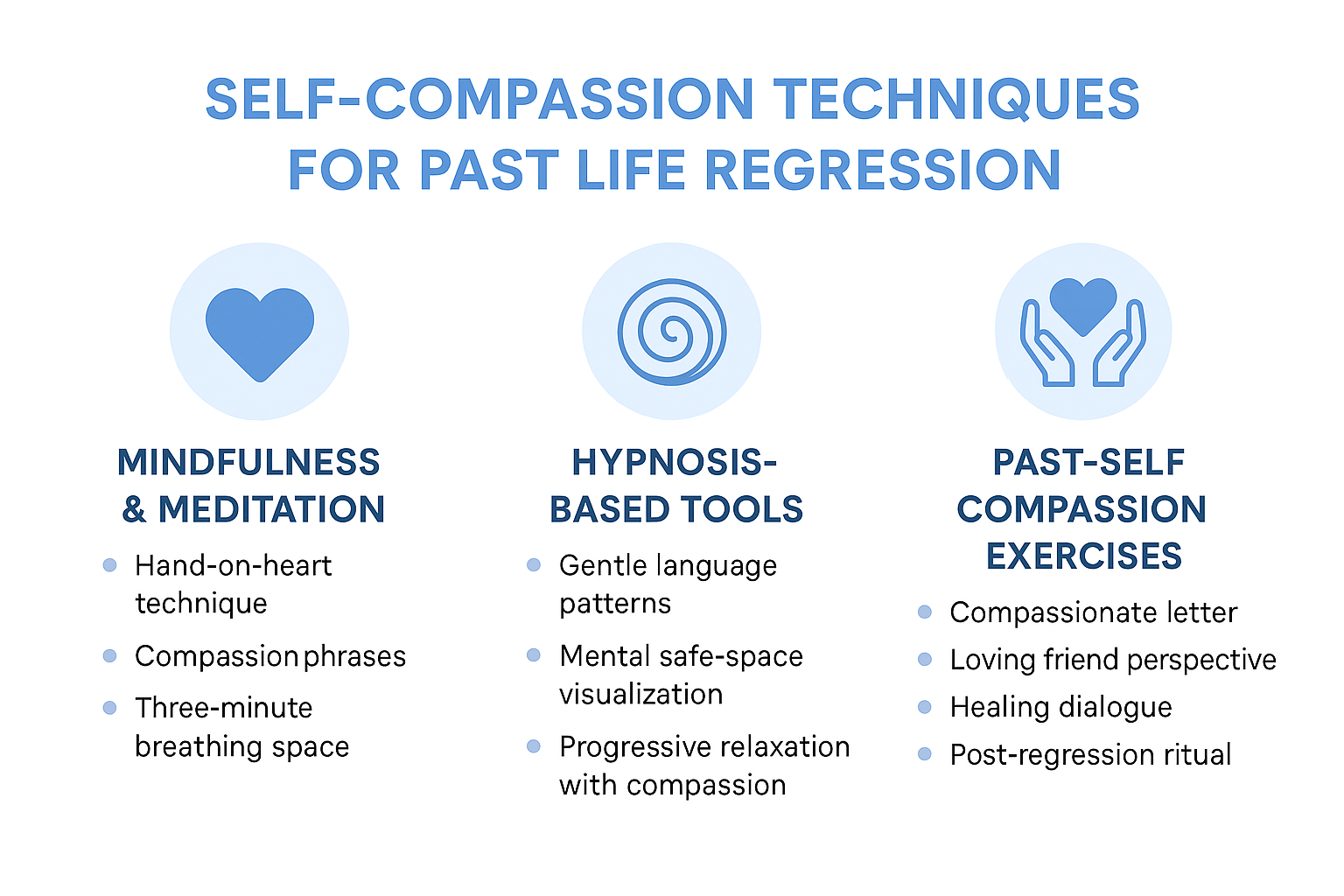
The way that I promote self-compassion in session in which it could be used to enhance the experience is to start with a 10-minute self-compassion meditation. It involves placing your hand on your heart and repeat phrases like “May I be kind to myself” or “May I accept what I discover with love.”
The person uses the three-minute breathing space technique before entering regression. Focuses on their breath for one minute, expands their awareness to their whole body for another minute, then sends loving thoughts to themself for the final minute.
By creating a compassionate inner voice during the session will help when difficult memories surface. Nentally tell yourself “This is a moment of suffering, and suffering is part of the human experience.”
It’s important to practice mindfulness of emotions without trying to change them. Notice feelings that arise about past experiences and acknowledge them with phrases like “I see you, fear” or “I hear you, sadness.”
Leveraging Hypnosis for Compassionate Exploration
I use hypnosis scripts that include compassionate language patterns. Instead of commanding statements, I use gentle suggestions like “You might find yourself feeling safe to explore” or “Your wise inner self will protect you.”
I build in compassionate anchors during the hypnosis induction to create mental safe spaces where the person can retreat if memories become overwhelming. An example is helping the person visualize themselves surrounded by loving light or protective figures.
All of this helps program compassionate responses into the hypnotic state. It suggests to the person that they will view past life experiences through the lens of understanding rather than judgment.
Forgiveness affirmations are also included the hypnotic suggestions. They tell the subconscious mind that the person is ready to forgive their past self for any perceived mistakes or shortcomings.
Another way to foster more compassion in hypnosis is to use progressive muscle relaxation combined with self-compassion phrases. As you relax each body part, it is suggested to send it gratitude and love for carrying your experiences.
Exercises for Cultivating Kindness to the Past Self
Before beginning a regression, I often encourage clients to write a compassionate letter to their past-life self. This practice helps them acknowledge what that version of themselves endured while expressing appreciation for their strength, resilience, and courage.
During the session, clients are guided to use a self-compassion touch technique. When they witness their past self in a difficult moment, they can imagine placing a comforting hand on that self’s shoulder or offering a supportive embrace. This visualization helps soften the emotional experience and deepen healing.
I also recommend the “loving friend” perspective exercise. Clients can reflect on how a caring and understanding friend might respond to their past self’s struggles, and then offer that same kindness and warmth inwardly.
Another effective tool is creating a healing dialogue between the current self and the past-life self. This allows the wiser, present version of the individual to gently speak to the past version, offering comfort, guidance, and reassurance as the experience unfolds.
After the regression, I encourage clients to establish a simple compassion ritual. They may spend a few minutes sending love and gratitude to their past-life self for everything that self lived through and carried. This closing practice helps integrate the healing and honors the journey of the soul.
Past Life Regression Hypnosis Benefits and Outcomes
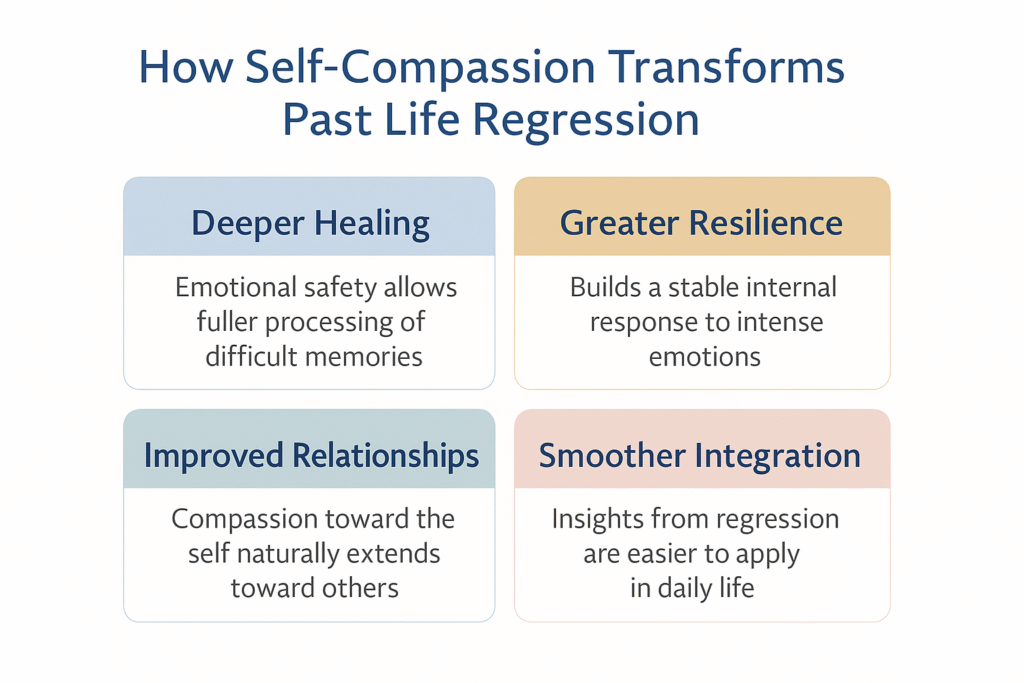
Self-compassion acts as a powerful catalyst that amplifies the benefits of past life regression therapy. When you approach these sessions with kindness toward yourself, you create space for deeper healing, stronger resilience, and more meaningful personal transformation.
Boosting Personal Growth and Psychological Adjustment
Self-compassion creates the ideal environment for psychological adjustment during past life regression. When you treat yourself with understanding rather than judgment, you become more open to exploring difficult memories and emotions.
This openness leads to significant personal growth. You develop greater self-awareness as you examine patterns across different lifetime experiences. The compassionate mindset helps you process challenging revelations without becoming overwhelmed.
Your psychological adjustment improves as you learn to view past experiences through a lens of understanding rather than criticism. This shift in perspective allows you to integrate new insights more effectively.
Research shows that people who practice self-compassion experience better emotional regulation. During regression sessions, this translates to staying grounded even when confronting intense memories or emotions.
The growth you experience extends beyond the therapy session. You carry these new perspectives into your daily life, creating lasting positive change in how you view yourself and your experiences.
Fostering Resilience and Coping Mechanisms
Self-compassion strengthens your ability to bounce back from difficult experiences revealed during regression therapy. When challenging memories surface, your compassionate response helps you maintain emotional stability.
You develop stronger coping mechanisms as you practice treating yourself with kindness during vulnerable moments. This skill becomes invaluable when processing intense emotional content from past life experiences.
The resilience you build through compassionate self-talk carries over into your current life challenges. You learn to face difficulties with the same understanding you show yourself during therapy sessions.
Your coping strategies become more adaptive when rooted in self-compassion. Instead of avoiding difficult emotions, you learn to sit with them compassionately while working through the healing process.
This resilience helps you stay committed to the regression process even when sessions become emotionally demanding. You trust in your ability to handle whatever insights emerge.
Improving Relationships and Emotional Well-Being
Self-compassion during regression work creates positive ripple effects in your relationships. As you develop a kinder relationship with yourself, you naturally extend this compassion to others.
Your emotional well-being improves as you release self-judgment and embrace understanding. This internal shift helps you approach relationships with greater patience and empathy.
Many regression experiences reveal connections between current relationships and past life dynamics. When you process these insights with self-compassion, you can heal old wounds that may be affecting present relationships.
Your increased emotional stability benefits everyone around you. Friends and family often notice positive changes in how you communicate and respond to conflicts.
The optimism that grows from compassionate self-treatment helps you approach relationships with hope rather than fear. You become more willing to be vulnerable and authentic with others.
Facilitating Integration of Insights into Daily Life
Self-compassion makes it easier to apply regression insights to your everyday experiences. When you approach new understanding with kindness, you create space for genuine transformation.
Your inner wisdom becomes more accessible when filtered through compassionate awareness. You can discern which insights are most relevant for your current growth without harsh self-criticism.
The integration process becomes smoother because you give yourself permission to change gradually. Self-compassion recognizes that transformation takes time and patience.
You develop practical ways to honor the lessons learned during regression sessions. This might include changing harmful patterns, pursuing new interests, or healing old relationships.
Your daily life reflects the positive psychology principles that emerge from compassionate regression work. You begin to see challenges as opportunities for growth rather than sources of stress.
Navigating Challenges and Enhancing Long-Term Outcomes
Self compassion provides essential psychological tools for managing difficult emotions and trauma responses that may surface during past life regression sessions. Research demonstrates measurable improvements in anxiety and depression when these techniques are properly integrated into therapeutic practices.
Managing Anxiety, Depression, and Psychological Distress
Past life regression can trigger intense emotional responses that challenge your psychological stability. Your consciousness may encounter unexpected memories or feelings that amplify existing anxiety or depression symptoms.
Self compassion acts as a protective buffer during these difficult moments. When distressing emotions arise, you can acknowledge them without harsh self judgment. This approach prevents the secondary suffering that occurs when you criticize yourself for having strong reactions.
Studies show that individuals with higher self compassion experience 50 percent lower rates of depression. You can apply this during regression by treating yourself with the same kindness you would offer a good friend facing similar struggles.
Practice mindful awareness of your emotional state throughout the session. Notice when anxiety peaks without trying to suppress or amplify these feelings. This balanced approach allows you to process difficult material while maintaining psychological safety.
Overcoming Trauma and PTS During Regression
Trauma memories from past life experiences can create symptoms similar to post traumatic stress. Your mind may struggle to distinguish between past and present experiences, leading to overwhelming emotional responses.
Self compassion helps regulate your nervous system response to traumatic material. When you encounter disturbing memories, remind yourself that you are safe in the present moment. This grounding technique prevents complete immersion in traumatic consciousness states.
Acknowledge that trauma responses are normal reactions to abnormal experiences. Your brain is protecting you by creating these defensive responses. Accepting this reality reduces shame and self blame that often accompany trauma symptoms.
Create a self compassion phrase you can use during difficult moments: “This is a moment of suffering. Suffering is part of human experience. May I be kind to myself right now.” This simple practice activates your parasympathetic nervous system and promotes emotional regulation.
Tracking Progress: Meta Analysis and Self Compassion Measures
The Self Compassion Scale (SCS) provides measurable data about your progress in developing compassionate responses to challenging experiences. Regular assessment helps identify areas where additional support may be needed.
Meta analysis research confirms that self compassion training produces consistent improvements in mental health outcomes. You can expect gradual but steady progress as you integrate these practices into your regression work.
Track specific metrics including anxiety levels before and after sessions, sleep quality, and overall emotional stability. Document moments when self compassion helped you navigate difficult regression material successfully.
Monitor your internal dialogue patterns over time. Notice whether your self talk becomes more supportive and understanding as you develop stronger self compassion skills. These qualitative changes often precede measurable improvements in psychological distress levels.
Review your progress monthly using standardized measures. This data driven approach helps you understand which self compassion techniques work most effectively for your specific needs and challenges.
Embracing Healing with Past Life Regression or Spiritual Hypnosis
Past life regression is a gentle invitation to explore your inner world with openness and love. When you approach past life regression through the lens of self compassion, you create a safe and nurturing space for healing to unfold naturally. It becomes less about uncovering the past and more about connecting with the deeper wisdom of your soul.
As you meet past versions of yourself with kindness and understanding, you begin to release old patterns and emotional weight that no longer serve you. This compassionate awareness helps you see your journey across lifetimes as a beautiful tapestry of learning, growth, and transformation.
Each session is an opportunity to come home to yourself. With every breath and every moment of acceptance, you strengthen your connection to your higher self and open your heart to peace, clarity, and love. The more you practice self compassion, the more you align with your true essence and allow healing to flow through every part of your being.
Finally, I’d like to remind you that you are your own best healer. By treating yourself with the same love and gentleness you would offer a dear friend, you awaken the wisdom within and step into a life filled with balance, understanding, and soulful clarity.
