

Many people wonder whether memories from past life regression sessions reflect real events or come from imagination. Medical and scientific experts widely consider past life regression unscientific, with claims of recovered past life memories generally regarded as fantasies, delusions, or cryptomnesia rather than actual recall of previous lives. The practice uses hypnosis to access what practitioners believe are memories from earlier incarnations, but no solid evidence proves these experiences represent genuine historical events.
I have studied consciousness exploration and regression techniques for years, and I understand why this topic sparks both curiosity and skepticism. Through my work offering past life regression services, I have observed how these sessions can produce vivid experiences that feel completely real to participants. The accuracy question matters because it affects how we interpret these experiences and what value we gain from them.
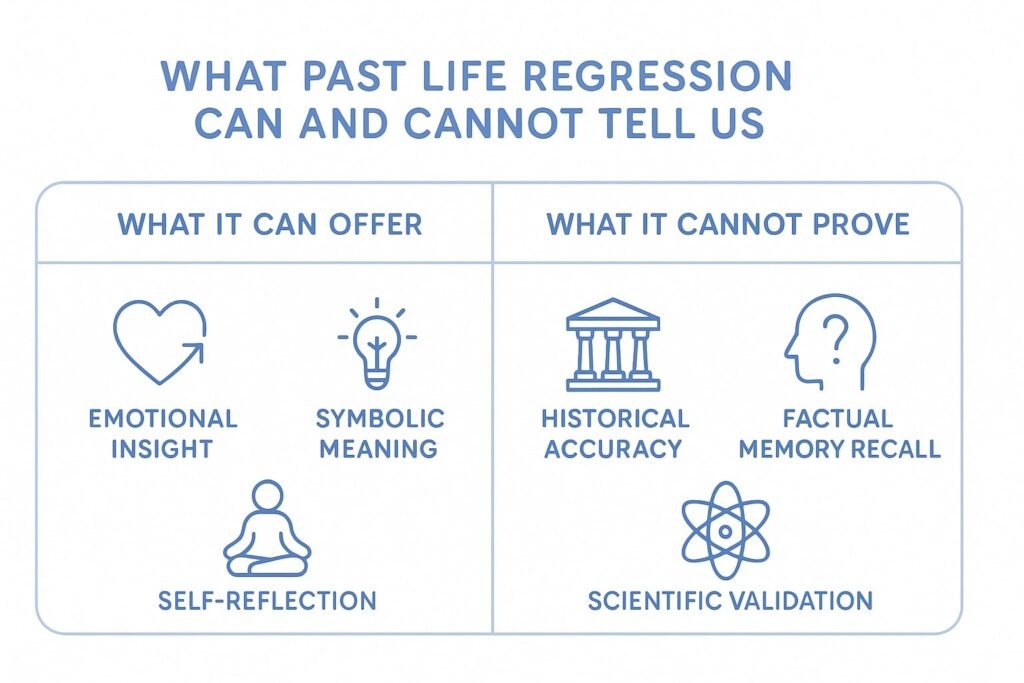
The truth about past life regression accuracy is more complex than a simple yes or no answer. While the memories retrieved may not be historically accurate accounts of actual past lives, many people find therapeutic value in exploring the imagery and narratives that emerge during sessions. Understanding what past life regression can and cannot do helps set realistic expectations and allows you to decide if this practice might benefit your personal growth journey.
Key Takeaways
- Past life regression lacks scientific validation as a method for accessing genuine memories of previous lives
- The experiences during regression sessions may stem from imagination, suggestion, or forgotten memories rather than actual past incarnations
- Despite questions about historical accuracy, some people report therapeutic benefits from exploring the narratives that emerge during sessions
Understanding Past Life Regression
Past life regression uses hypnosis to help people access what appear to be memories from previous lifetimes, drawing on beliefs about reincarnation and the soul’s journey across multiple existences. The practice combines techniques from hypnotherapy with ideas from various spiritual traditions to explore possible connections between past experiences and current life patterns.
Definition and Core Principles
Past life regression is a form of therapy that involves accessing memories and experiences from past lives. The technique relies on the belief that individuals have lived multiple lives and that experiences from those lives can influence present behavior and emotions.
During a past life regression session, the client accesses what seem to be memories of a different lifetime, relying on their higher self as a guide to understand what they are experiencing. People may encounter images from a recent time period, a specific moment in history, or completely unfamiliar settings. The goal is not to relive dramatic stories but to notice what emerges when the mind relaxes and becomes more receptive to inner imagery.
The core principle centers on the idea that the soul carries forward unresolved issues, relationships, and lessons from one lifetime to another. I find that practitioners view these sessions as opportunities to understand current life challenges by examining their possible roots in previous existences.
Historical and Cultural Roots
Reincarnation has been a central belief in many spiritual traditions for thousands of years. Eastern religions like Hinduism and Buddhism have long taught that the soul returns to physical form multiple times as part of its spiritual evolution.
The modern practice of past life regression emerged in the Western world during the 20th century. Psychiatrists and therapists began using hypnosis to help patients access what appeared to be memories from previous lifetimes. The theory of reincarnation may offer insight into several features of human personality and biology that contemporary theories do not clarify adequately.
Different cultures approach past lives with varying perspectives. Some view them as literal previous existences while others interpret them as symbolic representations of inherited memories or unconscious material. Past life regression bridges the gap between science and spirituality, which explains why it continues to spark both interest and debate.
Role of Hypnosis and Hypnotherapy
Past life regression is a technique that uses hypnosis or deep relaxation to help people access what feels like memories from previous lifetimes. A trained hypnotherapist guides the individual into a relaxed state where the conscious mind becomes quieter and the subconscious mind becomes more accessible.
The hypnotherapist does not control the client or implant suggestions. Instead, they facilitate a state of focused attention where images, emotions, and sensations can surface naturally. I work with clients to create a safe environment where they feel comfortable exploring whatever arises during the session.
The depth of hypnosis needed varies from person to person. Some people experience vivid, detailed scenes while others receive more subtle impressions or feelings. The hypnotherapist asks questions to help the client describe and understand their experience without leading them toward specific answers or outcomes.
How Past Life Regression Sessions Work
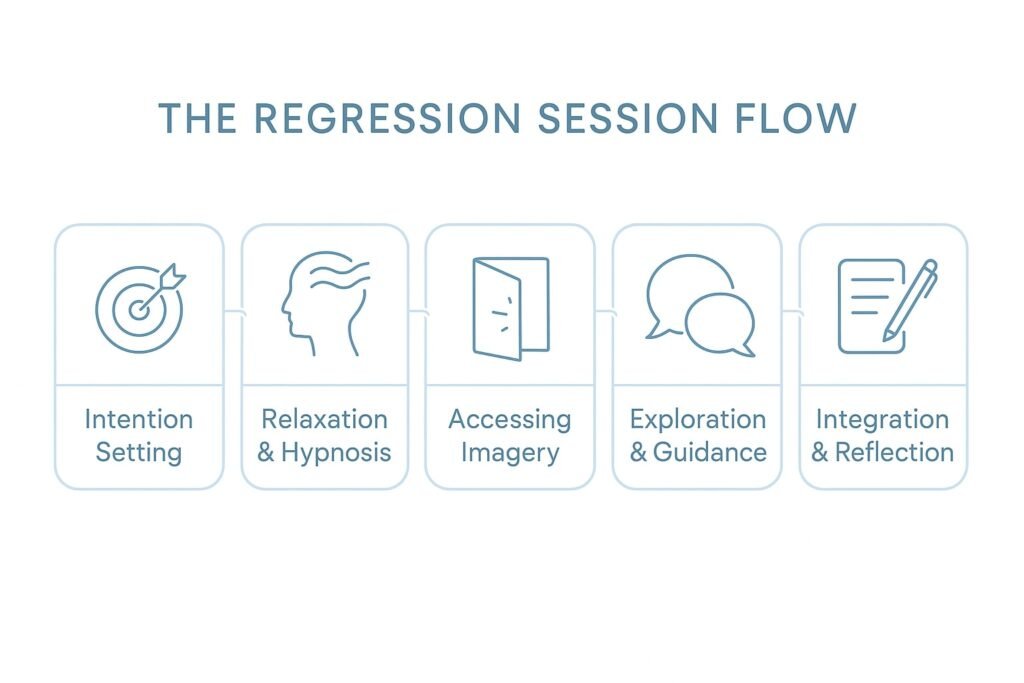
A typical regression session follows a structured approach that begins with guided relaxation and moves into accessing memories from what practitioners believe are previous lifetimes. The process relies on entering altered states of awareness and concludes with reflection practices to help make sense of the experience.
The Regression Session Process
Past life regression therapy uses guided hypnosis to help access memories from what are thought to be previous lives. I guide clients through a regression session that typically lasts between 90 minutes and three hours.
The session starts with a conversation about what the client hopes to explore. We discuss any current challenges or patterns they want to understand better.
Next comes the induction phase. I use verbal guidance to help the client relax each part of their body systematically. This creates a bridge between the conscious and subconscious mind.
Once deep relaxation is achieved, I ask questions to guide the client backward through time. We might start with childhood memories before moving further back. The practitioner helps navigate these experiences and provides support throughout the process.
Clients often describe seeing images, feeling emotions, or simply knowing information about another time period. The experience varies from person to person.
States of Consciousness and Relaxation
The trance state used in regression work is similar to deep meditation. You remain aware and in control throughout the entire session.
This altered state of consciousness allows access to the subconscious mind. Think of it as the mental space between being fully awake and falling asleep. You can still hear my voice and respond to questions.
Deep relaxation is essential for the process to work. Your brain wave activity shifts from normal waking beta waves to slower alpha and theta waves. These slower patterns are associated with creativity and memory access.
Many people worry they won’t be able to reach this state. Most clients achieve the necessary level of relaxation with proper guidance. Meditation experience can help but is not required.
Integration and Journaling Practices
Processing the emotions and insights that emerge during regression is critical for getting value from the experience. Integration begins immediately after the session ends.
I recommend journaling about the experience while details are still fresh. Write down everything you remember, including images, feelings, and any connections to your current life.
The days following a session often bring additional insights. Your subconscious mind continues processing the information even after you leave my office.
Some clients notice shifts in their perspective on current relationships or challenges. Others report feeling relief from longstanding emotional patterns. Integration steps help connect the regression experience to your everyday life.
Regular journaling practice supports this ongoing integration process. I suggest setting aside time each day to reflect on how the session relates to your present circumstances.
Evaluating the Accuracy of Past Life Regressions
The reliability of memories from past life regression sessions depends on multiple factors including the brain’s natural tendencies during hypnosis and the limited scientific evidence available. Human memory operates differently under hypnotic states, which creates challenges when trying to verify whether recalled experiences represent actual past lives or mental constructs.
Scientific Research and Evidence
The scientific community remains divided on whether past life regression produces genuine memories. Studies show the human mind is highly suggestible under hypnosis, which makes it difficult to separate real memories from imagined ones.
Ian Stevenson conducted extensive research into reincarnation cases, though his work focused more on children who spontaneously recalled past lives rather than hypnotic regression. His book Reincarnation and Biology examined biological features that might connect to previous existences.
Current research faces limitations because reliable instruments to measure psychological outcomes from regression need further development. The field lacks standardized protocols for testing accuracy. Most evidence remains anecdotal rather than experimental, which prevents definitive conclusions about whether the memories reflect actual past lives.
Expert Opinions and Case Studies
Psychiatry and psychology professionals express caution about regression accuracy. Experts warn that traumatic false memories from supposed previous lives can be implanted during sessions, causing real harm to clients.
Some practitioners report that clients gain therapeutic benefits regardless of whether memories are historically accurate. The emotional processing during sessions can help people address current life challenges. However, around 60 percent of discussions focus on personal stories rather than scientific scrutiny, which limits objective evaluation.
Mental health professionals emphasize that the therapeutic value differs from historical accuracy. I find that many clients experience genuine emotional releases during regression work, though this does not prove the memories represent actual past lives.
Common Confounding Factors
Cryptomnesia represents one major challenge in evaluating past life regression accuracy. This occurs when people recall information they previously encountered but forget the original source, then believe it represents a past life memory.
The brain naturally fills gaps in memory with plausible details, especially under hypnosis. Practitioners might unintentionally guide clients toward certain responses through leading questions or expectations. Cultural knowledge from books, movies, or stories can resurface during regression sessions as seemingly authentic memories.
The hypnotic state itself alters how the brain processes and creates memories. People in trance often experience vivid mental imagery that feels completely real, even when it originates from imagination rather than actual experience. Memory consolidation works differently during altered states of consciousness, which complicates efforts to verify accuracy through traditional methods.
Theories Explaining Past Life Memories
When people describe detailed memories from apparent previous lives, several theories attempt to explain where these experiences come from. The explanations range from psychological processes in the subconscious mind to spiritual beliefs about the soul’s journey across multiple lifetimes, and even concepts involving non-linear time and consciousness.
Psychological Perspectives and Archetypes
From a psychological standpoint, what appears as past life memories may originate from the subconscious mind rather than actual previous incarnations. The human brain stores vast amounts of information from books, movies, conversations, and experiences we’ve long forgotten. This phenomenon, called cryptomnesia, means we can recall information without remembering where we learned it.
Carl Jung’s work on archetypes offers another explanation. Universal symbols and stories exist across cultures, and our minds naturally tap into these shared human experiences. During hypnosis or deep relaxation, the subconscious mind might construct narratives using these archetypes, creating what feels like authentic memories from another time.
Medical practitioners widely consider past life regression discredited and unscientific, viewing these memories as products of imagination, suggestion, or false memory creation. The therapeutic setting itself can inadvertently implant false memories, especially when a person is in a highly suggestible hypnotic state.
Spiritual and Metaphysical Interpretations
Many practitioners view past life memories as evidence of reincarnation, where the soul carries experiences across multiple lifetimes. These theories seek to explain how past life memories are stored and accessed and influence current life patterns.
The spiritual perspective suggests the soul retains a record of all its incarnations. These memories remain dormant in ordinary consciousness but can surface through specific techniques like hypnosis or meditation. This view holds that we carry unresolved issues, relationships, and lessons from previous lives into our current existence.
Some metaphysical theories propose that past life memories serve a purpose in our spiritual growth. They emerge when we need insight into current challenges or relationship patterns. The soul supposedly chooses which memories to reveal based on what will help us heal and evolve.
Time, Consciousness, and Parallel Lives
Some theories challenge our linear understanding of time itself. If time exists simultaneously rather than sequentially, what we call past lives might actually be parallel experiences of consciousness occurring in different time periods at once.
Quantum physics concepts have inspired theories about multiple timelines and dimensions. In this view, consciousness isn’t bound by the same time constraints as physical reality. During altered states, our awareness might access other versions of existence happening in what we perceive as the past or future.
These concepts suggest that memory itself functions differently than we assume. Rather than retrieving information from our personal history, we might be tapping into a broader field of consciousness that contains all human experiences across time. This collective consciousness could explain why detailed and historically accurate memories of previous lives sometimes emerge during regression sessions.
Therapeutic Value and Potential Benefits
Regression therapy can offer meaningful psychological benefits regardless of whether memories reflect actual past lives. Many people report reduced symptoms and greater self-understanding after sessions focused on healing trauma and releasing difficult emotions.
Healing Trauma Through Regression
Past life regression therapy works by helping people access deeply buried emotional experiences. During sessions, I guide clients into relaxed states where they can explore memories or symbolic narratives that their mind presents. Research on therapeutic past-life regressions has moved beyond individual case studies to examine broader patterns of healing.
The process allows trauma to surface in a safe environment. When clients encounter painful experiences through regression, they can process these emotions with distance and support. Many report feeling lighter after releasing pain they carried for years.
The mind may create metaphorical stories that represent current struggles. Whether these memories are real or symbolic matters less than the healing that occurs when someone confronts and releases emotional pain.
Insight and Emotional Release
Sessions frequently produce moments of clarity about current life patterns. I notice clients suddenly understanding why certain situations trigger strong reactions or why they make specific choices repeatedly. Past life regression can reveal connections between unexplained feelings and deeper psychological material.
Emotional release happens when people finally express feelings they suppressed. Crying, anger, or relief during sessions often marks important breakthroughs. The experience gives permission to feel emotions fully without judgment.
These insights help people recognize patterns in their behavior. Someone might discover that their difficulty trusting others connects to themes that emerge during regression, leading to greater self-awareness and personal growth.
Effect on Relationships and Fears
Regression therapy addresses specific issues like phobias and relationship difficulties. People struggling with unexplained fears sometimes find relief when exploring possible origins through this approach. The therapy creates space to examine why certain people or situations cause intense reactions.
Relationship patterns become clearer during sessions. I work with clients who discover recurring themes in how they connect with partners, family members, or friends. Understanding these patterns from a new perspective can shift how someone approaches relationships.
Fear and anxiety often decrease after therapy sessions. The therapeutic benefits extend to everyday concerns and help people move past limitations. Some clients report that long-standing phobias lose their grip after working through related material during regression.
Limitations, Risks, and Ethical Considerations
Past life regression therapy carries significant concerns about memory accuracy, potential psychological harm, and the need for proper professional oversight. Understanding these challenges helps people make informed decisions about whether this practice aligns with their personal goals and mental health needs.
Memory Reliability and False Memories
The human brain does not store memories like a video recorder. When I work with clients in hypnotic states, I recognize that what emerges may reflect imagination, suggestion, or confabulation rather than actual past events.
Research shows that memory is reconstructive. Each time we recall something, we rebuild it using current beliefs, emotions, and external influences. Under hypnosis, people become more suggestive and may unconsciously create narratives that feel real but lack historical basis.
Leading questions or therapist expectations can shape the content of regression sessions. A client might pick up subtle cues about what the practitioner expects to hear and produce memories that match those expectations. This creates false memories that feel authentic but have no connection to actual past lives.
The inability to verify most regression content makes distinguishing between genuine recall and imagination nearly impossible. Without historical records or evidence, we cannot confirm whether the details shared during sessions represent real events or creative mental constructs.
Psychiatric and Mental Health Implications
Past life regression can trigger unexpected emotional responses or worsen existing mental health conditions. People with trauma histories, dissociative disorders, or unstable psychiatric conditions face higher risks during these sessions.
Creating false memories through regression therapy can have serious consequences. Some individuals may develop distorted beliefs about their identity or current relationships based on imagined past life experiences. This confusion sometimes interferes with present-day functioning and relationships.
Vulnerable clients might use past life explanations to avoid addressing real psychological issues that need proper treatment. Attributing current problems to past lives can delay or prevent people from getting evidence-based mental health care for conditions like depression, anxiety, or trauma.
Ethical issues affecting researchers in qualitative studies apply equally to past life regression practitioners who must prioritize client welfare above other considerations.
Professional Standards and Ethics
The past life regression field lacks universal licensing requirements or standardized training protocols. Practitioners come from diverse backgrounds with varying levels of mental health expertise and ethical training.
Ethical considerations in research and professional practice require that work is conducted with integrity, respect, and responsibility toward clients. I recognize that practitioners must obtain informed consent, clearly explaining that regression experiences cannot be verified as historical facts.
Responsible practitioners need mental health training to recognize when clients require psychiatric referral rather than regression therapy. Ethical limitations refer to things practitioners cannot do based on professional boundaries and client protection concerns.
The lack of regulatory oversight means clients must carefully evaluate practitioner credentials, training, and ethical commitments before engaging in sessions. Professional associations exist but membership remains voluntary and standards vary widely across organizations.
Want to Try Past Life Regression?
If you’re ready to explore past life regression, working with a trained professional makes all the difference. I bring years of experience as a certified clinical hypnotherapist and past life regressionist to guide you safely through this process.
My training includes certification through the National Board for Certified Clinical Hypnotherapists and specialized past life regression training through the Edgar Cayce A.R.E. Center. I also hold advanced degrees in psychology and counseling, plus Level 1 and Level 2 clinical hypnosis training.
During our sessions, I create a safe space where you can access deeper memories and patterns. You’ll be gently guided into a relaxed state where your subconscious mind can reveal insights that may help explain current challenges or relationships.
I tailor each session to your specific needs and questions. Some clients seek healing from emotional blocks while others want to understand their life purpose or recurring patterns. Whatever brings you to this work, I honor your pace and readiness.
Past life regression online sessions are available for those who prefer meeting virtually. This allows you to experience the process from the comfort of your own space while still receiving personalized guidance.
I combine my background in mental health, addiction recovery support, and spiritual growth to offer comprehensive care. My goal is helping you unlock the healing potential within your subconscious mind.
Ready to begin? I invite you to schedule your first session. Call me at 757-804-1006 to discuss how past life regression can support your journey toward clarity and transformation.
