

Life Purpose
Not Feeling Called to Anything? What That Really Means (And What to Do About It)
A compassionate look at why purpose doesn’t always arrive as a dramatic calling — and what quiet alignment with your own life can look like instead.
Many people assume they should feel a strong sense of direction or passion pulling them forward, but the truth is that not everyone experiences purpose that way. If you don’t feel called to anything specific, that doesn’t mean you’re lost, broken, or missing something essential about your spiritual path. Some people feel a clear calling from an early age, but for most of us, purpose shows up quietly through what we enjoy, what feels meaningful in the moment, and what we naturally gravitate toward.
The pressure to find a calling often comes from outside expectations rather than your own inner knowing. When you don’t feel that dramatic pull, it’s easy to wonder if something is wrong with you. But purpose isn’t always loud or obvious. It can be simple, personal, and discovered gradually through living your life rather than searching for one perfect answer.
As a certified hypnotherapist who works with people exploring their spiritual direction through soul purpose hypnosis, I’ve seen how often clients feel relieved when they learn that purpose doesn’t have to feel like a calling. Sometimes what matters most is learning to trust what feels right for you now, even when the bigger picture isn’t clear yet.
Quick Answer
Not feeling called to anything doesn’t mean you’re lost or missing something important about your spiritual path. Purpose often shows up gradually, through what already feels meaningful, rather than as one defining calling. Focusing on what feels slightly better right now, noticing what you naturally gravitate toward, and trusting that clarity builds over time can reveal your direction more reliably than waiting for a dramatic sign.
Key Takeaways
- ✦Not feeling called to anything doesn’t mean you lack purpose or direction
- ✦Purpose often appears gradually through what feels meaningful rather than a single dramatic calling
- ✦Focusing on what feels right in the present moment can reveal your path more clearly than searching for answers
In This Article
- Why the idea of a “calling” creates so much pressure
- Not everyone experiences purpose as a loud calling
- Common reasons you may not feel called
- What to focus on instead of a calling
- How purpose often shows up later
- Gentle practices that help when nothing feels clear
- What to do now
- Frequently asked questions

Why The Idea Of A “Calling” Creates So Much Pressure
The word “calling” carries heavy expectations. It suggests something absolute waiting to be discovered, like a hidden treasure you’re supposed to find.
When you hear about callings, they often sound grand and definitive. Society celebrates people who say they knew from childhood they were meant to be doctors or artists. This creates a standard that feels impossible to meet if you don’t experience that same clarity.
The pressure builds because a calling implies certainty. It suggests there’s one right answer to what you should do with your life. If you don’t feel pulled toward anything specific, you might worry something is wrong with you.
You may also wonder if you’re supposed to feel constant passion and excitement about your purpose. This expectation can make ordinary work feel inadequate. Not everyone experiences strong emotional pulls toward particular paths, and that’s actually common.
The idea that everyone must have a calling assumes we all function the same way. Some people naturally feel drawn to specific work or causes. Others find meaning through different experiences like relationships, learning, or simply being present in their daily lives.
This pressure can create a cycle where you search harder for feelings that may not arrive the way you expect them. You might question your interests or dismiss them because they don’t feel important enough. The concept becomes a source of stress rather than guidance.
In my work with spiritual hypnosis, I see many people who simply experience purpose differently than traditional calling narratives suggest.
Not Everyone Experiences Purpose As A Loud Calling
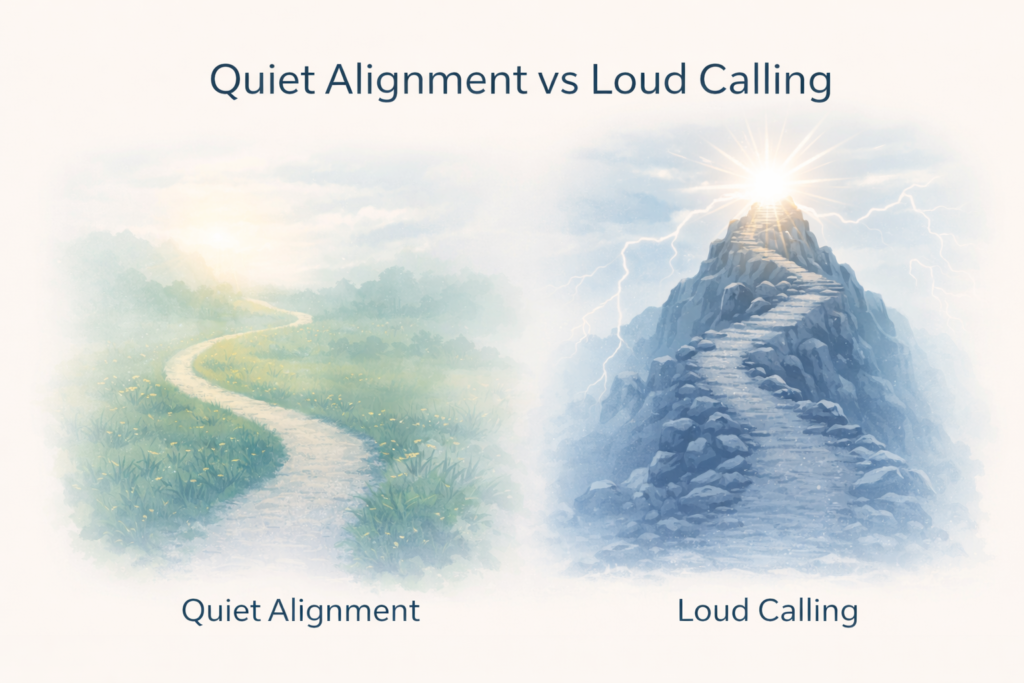
Purpose doesn’t always announce itself with clarity or intensity. Some people experience it as a steady hum rather than a lightning bolt, and both are equally valid ways to connect with meaning in your life.
Quiet Alignment Vs Loud Direction
A calling suggests something external is pulling you forward with unmistakable force. You might picture it as a voice, a sign, or an overwhelming urge to pursue one specific path. But many people never experience purpose this way.
Instead, you might notice quiet alignment. This feels less like being called and more like noticing what already fits. You recognize the activities that leave you energized rather than drained. You observe which conversations make you lose track of time. You see patterns in what you naturally gravitate toward when no one is watching or judging.
Quiet alignment doesn’t demand dramatic life changes. It shows up in small choices that consistently point in a similar direction. You might realize you feel most yourself when helping others solve problems, or when creating something with your hands, or when organizing systems that help things run smoothly.
Neither loud direction nor quiet alignment is superior. Your brain processes purpose based on your individual wiring, experiences, and circumstances. Some people need the certainty of a clear call. Others thrive by following subtle indicators over time.
Purpose Can Be Lived, Not Named
You can live a purposeful life without ever defining your purpose in words. Purpose exists in how you show up, not in how you describe what you do.
Think of purpose as something you practice rather than something you possess. When you listen carefully to a friend who needs support, you’re living purpose. When you solve a problem at work that makes someone’s day easier, you’re living purpose. When you teach your child something valuable, you’re living purpose.
The need to name your purpose often creates unnecessary pressure. You might spend years searching for the perfect title or mission statement while missing the meaningful moments already present in your days. Your actions contain your purpose, whether or not you can package it into a tidy explanation.
Many people discover their purpose backward. They look at their life after years of simply doing what felt right and suddenly see the thread connecting everything. The meaning was always there in the living of it, not in the labeling of it.
Common Reasons You May Not Feel Called
Sometimes the absence of a clear calling has less to do with whether one exists and more to do with what’s happening in your life right now. Your capacity to sense direction gets clouded by exhaustion, unrealistic expectations, or simply being between chapters.
You’re Overstimulated Or Burned Out
When you’re running on empty, you lose access to the quieter signals that guide you toward purpose. Burnout doesn’t just make you tired. It creates a fog that blocks your ability to feel much of anything.
You might notice you’ve lost interest in hobbies that used to light you up. Things that once brought satisfaction now feel flat. This isn’t apathy about your purpose. It’s your system telling you it needs rest.
Feeling unmotivated often gets mistaken for lacking direction. But when your nervous system is overloaded from constant demands, notifications, and decisions, it shuts down the receptors that help you sense what matters. You’re not broken. You’re overstimulated.
The path forward involves creating space rather than seeking answers. When I work with clients through spiritual hypnosis, those who’ve been pushing hardest often need permission to stop looking before they can start seeing. Your calling doesn’t disappear because you’re tired. It just waits until you have the energy to notice it.
You’ve Been Told Purpose Should Feel Bigger
Many people dismiss genuine callings because they don’t match the dramatic stories they’ve heard. You expect lightning bolts and life-changing revelations. Meanwhile, you overlook the quiet pull toward things that actually resonate.
Purpose doesn’t always arrive as a grand mission. Sometimes it shows up as curiosity about helping neighbors, interest in teaching kids to read, or satisfaction from organizing systems that work better. You’ve been conditioned to think these impulses don’t count unless they’re extraordinary.
This expectation creates a strange problem. You might actually be responding to real direction but rejecting it as too ordinary. The voice that says “this matters” gets drowned out by the voice that says “this isn’t big enough.”
I’ve watched people in hypnosis sessions discover their soul purpose isn’t what they imagined. It’s often more specific and more personal than the sweeping visions they thought they needed.
You’re In A Transitional Phase
Life moves in cycles. Some phases are for doing and others are for becoming. When you’re between identities, old interests fall away before new ones take shape.
This in-between space feels uncomfortable because nothing seems to stick. You’re not excited about what used to matter, but you haven’t found what matters next. That’s not lack of purpose. That’s transition.
Your previous sense of direction may have completed its usefulness. What called to you at twenty-five might not call to you at forty. What felt meaningful before a major life change might need to evolve into something different now.
These periods require patience more than action. Forcing a sense of calling during transition usually leads to false starts. The emptiness you feel isn’t permanent. It’s fertile ground where something truer can grow when the timing aligns.
What To Focus On Instead Of A Calling
You can focus on what feels manageable today, what naturally draws your attention, and what feels true to your current experience. These three areas give you something real to work with when the idea of a calling feels empty or confusing.
What Feels Slightly Better, Not Perfect
Start with what feels slightly better in this moment rather than searching for the perfect path forward. This might mean choosing to move your body for ten minutes instead of staying on the couch. It might mean sending one email instead of planning your entire career.
The goal is not to fix everything or find your purpose in one action. You simply notice what small step feels more aligned than staying stuck. When you practice mindfulness around these choices, you become aware of what actually helps versus what you think should help.
Some people find that doing dishes feels better than scrolling their phone. Others find that calling a friend feels better than researching their life purpose online. Neither choice is dramatic, but both create a small shift in how you feel right now.
What You Naturally Care About
Pay attention to the topics you think about without forcing yourself. These are the things you mention in conversation, read about when nobody is watching, or notice in your daily life. You do not need to turn these interests into a career or life mission.
Your natural interests show you what matters to you right now. Maybe you notice how people talk to each other. Maybe you care about how food is grown. Maybe you pay attention to color or sound or how spaces are organized.
These observations are not random. They point to what engages your attention naturally. When I work with people through spiritual hypnosis, we often explore these patterns because they reveal what your awareness gravitates toward without effort or performance.
What Feels Honest Right Now
Focus on what feels honest about your current situation instead of what you think you should want. This means acknowledging when you feel tired, confused, or uncertain about your direction. It also means recognizing when something genuinely interests you, even if it seems small or impractical.
Honesty creates clarity. When you admit that you do not feel called to anything, you stop forcing false enthusiasm. This opens space for real curiosity to emerge.
You might honestly want rest more than achievement right now. You might honestly care more about your relationships than your career. You might honestly need simplicity instead of purpose. All of these truths are valid starting points for how you spend your time and energy.
How Purpose Often Shows Up Later
Many people assume purpose reveals itself early in life. But that’s not how it works for most people.
Purpose often becomes clearer with time and experience. You might not recognize what matters to you until you’ve lived through different situations and learned what resonates. The search results confirm this reality: purpose can appear at any age and frequently evolves as you grow.
Here’s what makes purpose easier to spot later:
- ✦You know yourself better after years of experience
- ✦You’ve learned what drains you and what energizes you
- ✦You have more clarity about your values
- ✦You’ve built skills without realizing their significance
- ✦You’ve encountered enough variety to recognize patterns
In my work with spiritual hypnosis, I’ve seen countless clients discover their soul purpose in their 40s, 50s, or beyond. They often say the same thing: they needed those earlier years to understand what they were building toward.
Purpose isn’t always a lightning bolt moment. Sometimes it’s a quiet recognition that comes after you’ve accumulated enough life experience to see the thread connecting your choices.
You might be gathering the pieces right now without knowing it. The jobs you’ve held, the people you’ve helped, the interests that keep returning even when you ignore them. These aren’t random. They’re often signals that become obvious only when you look back with enough distance.
Your timeline for finding purpose doesn’t need to match anyone else’s. The waiting isn’t wasted time.
Gentle Practices That Help When Nothing Feels Clear

When you feel uncertain about your path, the best response is often to stop pushing for answers. These practices work with your natural rhythm instead of against it, allowing clarity to arrive in its own time.
Quiet Time Without Expectation
Sitting in silence without trying to figure anything out sounds too simple to work, but this is exactly what your system needs when you feel overwhelmed by questions.
Set aside ten minutes each day to sit comfortably. You’re not meditating or trying to empty your mind. You’re simply allowing yourself to be present without a goal.
Your thoughts will come and go. You might notice physical sensations like tension in your shoulders or a tight chest. These are signs your body is processing what your mind cannot yet name.
This practice doesn’t require special training or perfect conditions. You can sit on your couch, in your car before work, or on your back porch. The point is regular exposure to stillness without demanding that it produce insights or feelings of purpose.
Journaling Without Searching For Answers
Writing can help when you can’t feel anything clearly, but only if you remove the pressure to discover something profound.
Open a notebook and write whatever comes to mind for five to ten minutes. Don’t write about purpose or calling. Write about what you ate for breakfast, the conversation that annoyed you, or how your body feels today.
This type of writing helps you notice patterns over weeks and months. You might see that you write more on days when you spend time outside, or that certain activities drain you while others don’t.
The practice works because it gives your internal experience a place to land without judgment. You’re creating a record of your actual life, which often contains more useful information than abstract thinking about what you should be doing.
Letting Life Give You Feedback
Instead of searching inside yourself for a hidden calling, pay attention to how you respond to daily experiences.
Notice what makes you lose track of time, even in small ways. Notice what leaves you feeling more energized rather than depleted. Notice which conversations you look forward to and which ones feel like obligations.
This feedback shows up in your body and your attention, not in dramatic revelations. You might realize you feel calmer after organizing a space or more alive after explaining an idea to someone.
Keep this observation light and curious. You’re gathering information, not making permanent decisions. Life will continue to give you feedback as long as you stay open to receiving it without forcing it to mean something bigger than it is.
What to Do Now
You don’t need a grand calling to live a meaningful life. Many people move through their days without a clear sense of spiritual direction, and that’s more common than you might think. The pressure to find your one true purpose can create more stress than clarity.
What matters more is staying open to the small moments that bring you satisfaction or peace. Notice what feels right in your daily choices. Pay attention to the people and activities that make you feel more like yourself.
If you’re curious about exploring this deeper, spiritual hypnosis offers a gentle way to connect with your inner wisdom. I work with people who want to understand their soul purpose without the pressure of finding a perfect answer. The process helps you access your own insights rather than forcing you into someone else’s definition of meaning.
You might consider:
- ✦Exploring what brings you quiet satisfaction rather than looking for dramatic signs
- ✦Letting yourself be interested in multiple things without choosing just one
- ✦Trusting that purpose can unfold gradually over time
- ✦Working with practices that help you listen to your inner guidance
Not feeling called to anything doesn’t mean something is wrong with you. It might mean you’re in a phase of listening and gathering information. Your path can reveal itself through simple daily choices and genuine curiosity. Sometimes the invitation is to simply be present with what’s in front of you right now.
✦ ✦ ✦
Services at Intuitive Clarity Hypnosis are for educational and personal development purposes only and are not intended to diagnose, treat, cure, or prevent any medical or mental health condition. Hypnosis and coaching are complementary and not substitutes for licensed care. Read full disclaimer.
Frequently Asked Questions
Many people wonder if their experience is unusual or if there are practical ways forward when a clear sense of purpose feels absent. These questions address common concerns about living meaningfully without feeling a strong pull toward any particular path.
Is it normal to struggle with finding a personal calling or purpose?
Yes, this is completely normal. Many people move through life without ever experiencing a single, defining sense of purpose. The idea that everyone should feel called to something specific is a cultural expectation, not a universal truth. You might find meaning in different ways at different times in your life. Some people discover purpose through relationships, daily work, creative expression, or simply being present for others. Your experience is shared by more people than you might realize. Not feeling a calling does not mean something is wrong with you or that you are missing out on a vital part of life.
How can I live a fulfilling life without a clear calling?
You can build a fulfilling life by focusing on what matters to you in the present moment. Look at the activities that bring you satisfaction, the people who matter to you, and the values you want to honor in your daily choices. Fulfillment often comes from simple, consistent actions rather than grand purposes. You might find meaning in helping a neighbor, learning a new skill, or maintaining strong relationships with friends and family. Consider what feels good and right to you rather than searching for something that feels like destiny. Your life can have depth and value through the accumulation of meaningful moments and connections.
What should I do if I’m unable to identify any passions or interests?
Start with curiosity rather than passion. You do not need to feel intense excitement about something for it to be worth your time. Try different activities without the pressure of finding your passion. Take a class, volunteer somewhere new, or simply notice what holds your attention during the day. Sometimes interest develops slowly through exposure and practice rather than arriving as immediate enthusiasm. Pay attention to what you do not mind doing or what makes time pass more easily. These quieter forms of engagement can be just as valid as burning passion. You might also explore what you valued as a child before you learned to judge your interests.
Can a person lead a successful life without feeling a religious or spiritual vocation?
Yes, many people lead successful, meaningful lives without any sense of religious or spiritual calling. Success and meaning can come from career achievements, family relationships, community involvement, creative pursuits, or personal growth. Your definition of success belongs to you. It does not need to include spiritual elements if that does not resonate with your experience. Some people find their greatest satisfaction in practical contributions, intellectual pursuits, or simply being reliable and kind in their daily interactions. A successful life is one that aligns with your values and brings you a sense of satisfaction. This can look completely different from one person to another.
What are alternative ways to find meaning in life aside from having a specific calling?
Meaning can emerge from your relationships with other people. The connections you build and maintain, the support you offer, and the presence you bring to others can provide deep satisfaction. You can also find meaning through mastery and skill development. Getting better at something over time, whether it is your work, a hobby, or a practical skill, creates a sense of progress and accomplishment. Contributing to your community in small, regular ways offers another path to meaning. Some people discover meaning through appreciation and attention to the world around them. Noticing beauty, practicing gratitude, or simply being fully present in your daily life can create a sense of richness and value. You do not need a grand purpose to live with intention and care.
How can I contribute positively to society if I haven’t found a personal mission?
You can contribute through your everyday actions and choices. Being honest, reliable, and considerate in your interactions creates positive ripples in your community. Look for opportunities to help where you are right now. This might mean supporting a coworker, showing up for a friend, or volunteering for a local organization. Your contributions do not need to be connected to a larger mission to make a real difference in someone’s life. Small, consistent actions often create more positive change than waiting for the perfect cause or mission to reveal itself. You can be helpful, generous, and engaged without knowing your life’s purpose. Your presence and willingness to participate in your community already matter.
Ready to Explore Your Purpose?
If you’re in a season of listening rather than knowing, spiritual and life purpose coaching can offer gentle, judgment-free support as clarity unfolds in its own time.
Book Spiritual & Life Purpose Coaching
Explore Spiritual Purpose
Read: Finding Purpose When You Feel Lost
Contact Me
