

Many people struggle with anxiety that seems to have no clear cause. You might have tried different methods to ease it, yet something still feels unresolved. Past life regression offers a unique approach that explores experiences beyond your current lifetime to uncover emotional roots that may influence your present state.
So, can past life regression help with anxiety?
Past life regression can help with anxiety by guiding you to hidden memories and patterns that shape your current fears and emotions. Through relaxation and focused awareness, you can access deeper layers of the subconscious and gain insight into unresolved feelings. This process may not only bring relief but also foster a greater sense of self-understanding and peace.
When approached with an open mind and guided by a trained practitioner, past life regression becomes a safe space for emotional discovery. It invites you to connect with your inner world and find clarity about what truly drives your anxious thoughts.
Key Takeaways
- Past life regression explores deeper emotional roots of anxiety.
- Guided sessions can support healing and personal insight.
- Understanding subconscious patterns may reduce anxiety symptoms.
Understanding Past Life Regression and Anxiety
I use past life regression as a way to explore how unresolved memories may shape emotional patterns that lead to anxiety. By working with the subconscious mind, I help clients uncover deep-rooted causes of fear and stress that may not come from their current life experiences.
What Is Past Life Regression?
Past life regression is a guided process that uses relaxation and focused awareness to access memories believed to come from previous lifetimes. I use gentle hypnosis techniques to help clients reach a calm mental state where the subconscious mind becomes more open and responsive.
During a session, I guide the person to recall images, emotions, or impressions that surface naturally. These experiences often feel vivid and personal, even if the person does not consciously believe in past lives.
The goal is not to prove or disprove reincarnation but to use the process as a therapeutic tool for understanding emotional patterns. By exploring these memories, clients may gain insight into fears, habits, or reactions that seem to have no clear origin in their current life.
How Past Life Regression Relates to Anxiety
Anxiety often develops when the mind holds on to unresolved experiences or emotional energy. Through past life regression, I help clients identify the deeper roots of their anxiety, whether they stem from symbolic memories or actual past-life events.
When a person revisits a memory connected to fear or loss, they can process the emotion in a safe environment. This can reduce the intensity of anxiety in daily life.
Some clients describe a sense of relief or understanding after recognizing patterns that repeat across lifetimes. In practical terms, this awareness helps them respond to stress with greater calm and self-awareness.
The Role of the Subconscious Mind in Anxiety
The subconscious mind stores memories, beliefs, and emotions that influence behavior and mental health. Many anxious reactions begin in this deeper level of awareness, even when the conscious mind cannot identify the cause.
In regression work, I guide clients to access this part of the mind to uncover hidden triggers. The process allows them to observe their thoughts without judgment and release emotional tension.
By bringing subconscious material into conscious awareness, clients can create new responses to old fears. This shift supports emotional balance and helps reduce anxiety over time.
Mechanisms of Past Life Regression Therapy
I use past life regression therapy to guide people into a calm and focused state where the mind can explore memories and emotions stored below conscious awareness. This process relies on hypnosis, deep relaxation, and structured guidance to uncover emotional blocks and promote healing from unresolved experiences.
Hypnosis and Deep Relaxation Techniques
In a session, I begin by helping the person reach a state of deep relaxation. This calm state slows mental activity and allows the subconscious mind to become more accessible. Hypnosis is not about losing control; it is about focused awareness and heightened receptivity.
I use gentle voice cues and breathing exercises to lower physical tension. As the body relaxes, the mind enters a light trance similar to guided meditation. In this state, people can recall vivid imagery, emotions, or sensations that may feel connected to earlier experiences or symbolic memories.
The goal is to create a safe mental environment where the person can observe these impressions without fear or resistance. This deep relaxation supports emotional release and helps reduce anxiety that might arise during the process.
Accessing and Processing Unresolved Emotions
Once a relaxed state is reached, I guide the person to identify scenes or sensations that seem meaningful. These may represent emotional pain or patterns that influence current behavior. The focus is not on proving a literal past life but on understanding the emotional content that surfaces.
As these memories or images appear, I help the person describe what they see and feel. This process allows hidden emotions to move from the subconscious into awareness. When emotional blocks are recognized and expressed, the tension they create often begins to lessen.
Some people experience relief as they gain new insight into the roots of their fears or anxieties. By processing these emotions in a supported environment, they can begin to release old patterns and feel calmer in daily life.
The Therapeutic Process of Regression
Past life regression therapy follows a structured process that combines relaxation, recall, and reflection. I guide each session carefully, ensuring the person stays grounded and aware while exploring inner experiences. This approach allows them to examine emotional themes without becoming overwhelmed.
During regression, I may ask gentle questions to help clarify what the person senses or remembers. These questions help connect emotional experiences with current life challenges. The focus stays on understanding and healing rather than analyzing or judging.
After the exploration, I guide the person back to full awareness and discuss what emerged. This reflection helps integrate new insights into daily life. Over time, many people report feeling lighter, more centered, and less affected by the anxiety that once held them back.
Potential Benefits for Anxiety Relief
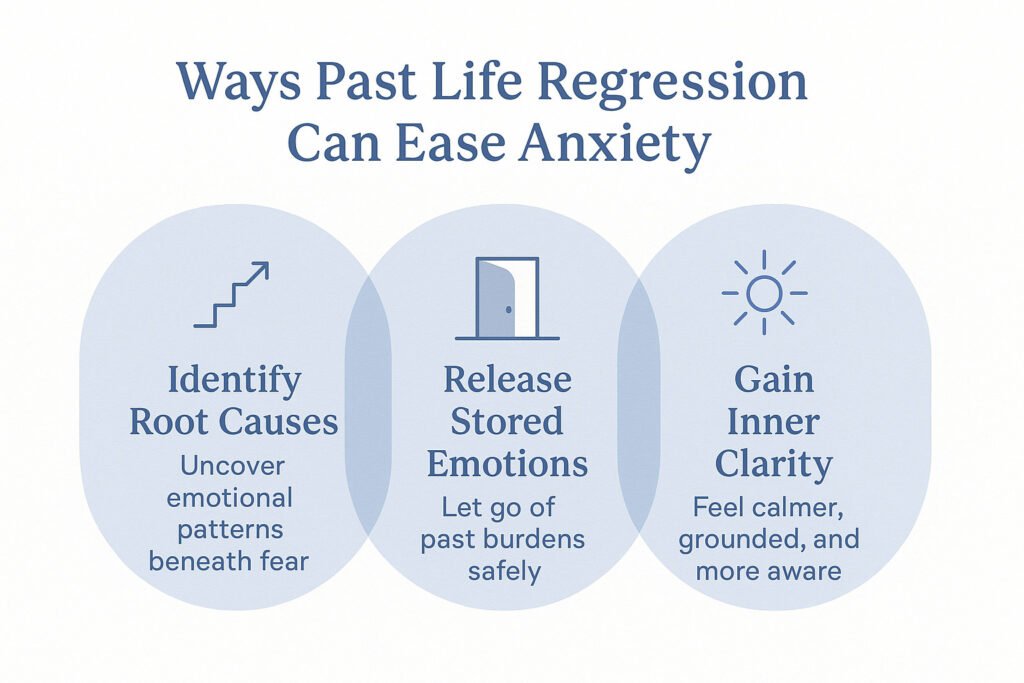
I’ve seen that exploring past life regression can help people understand the deeper layers of their anxiety. This process often brings awareness to emotional burdens, patterns, and fears that may not have clear origins in current life experiences. By recognizing and addressing these influences, clients often describe feeling lighter and more at peace.
Identifying Root Causes of Anxiety
When I guide someone through a regression session, the goal is to locate the root cause of their anxiety rather than only manage symptoms. Many people discover unresolved emotions or experiences that seem connected to their current stress responses.
Through guided relaxation and focused recall, individuals can uncover memories or impressions that mirror present-day challenges. This helps them see how old emotional patterns continue to shape their reactions.
I often encourage clients to reflect on what they learn during the session. Writing down recurring themes or feelings can help them connect the past with the present. This understanding can reduce confusion about why certain triggers cause such strong emotional responses.
Healing Emotional Burdens and Patterns
Past life regression can support emotional healing by helping people release long-held burdens. During sessions, clients often describe feelings of guilt, grief, or fear that seem to linger without explanation. Recognizing these emotions in a safe setting allows them to process and let go of the weight they carry.
I use gentle techniques to help clients reframe these experiences. Instead of reliving pain, they observe and understand it from a distance. This approach can ease emotional tension and create space for calm and self-acceptance.
Some clients notice changes in their daily lives after sessions, such as improved mood or less reactivity in stressful situations. These shifts may come from breaking old emotional patterns that once kept them stuck in cycles of anxiety.
Resolving Phobias and Fears
Many people seek regression therapy to address specific phobias or fears that seem irrational or unexplainable. Through regression, they may uncover scenes or sensations that relate symbolically to their current fears.
For example, a person with an intense fear of water might recall imagery involving drowning or loss at sea. While these memories cannot be proven historically, understanding the emotional link can still bring relief.
I guide clients to process these experiences with compassion and curiosity. By facing the source of fear in a relaxed state, they often find the emotional charge weakens. This can help them respond to real-life situations with greater confidence and less anxiety.
Personal Growth and Self-Discovery
I use past life regression as a tool to help people gain insight into their emotions, behaviors, and connections. It often reveals patterns that shape personal growth and supports greater self-awareness in daily life.
Enhancing Self-Awareness
When I guide someone through past life regression, I often see how it increases self-awareness. By exploring scenes or experiences from another lifetime, people notice emotional responses that mirror their current challenges. This process helps them identify triggers and better understand their reactions in the present.
I encourage clients to keep a journal after sessions. Writing down memories, feelings, and insights helps track patterns and emotional shifts. Over time, this awareness can reduce anxiety because it replaces confusion with understanding.
Some people also find that self-awareness improves decision-making. When they recognize the roots of certain fears or habits, they can respond with more clarity instead of reacting out of stress or uncertainty.
Understanding Life Purpose
Many people come to me asking why they feel drawn to certain roles, relationships, or goals. Past life regression can highlight recurring themes that point toward a deeper life purpose. Seeing how these themes appear across different experiences helps them connect their values with their current direction.
I often notice that understanding life purpose gives people a sense of calm. When they feel aligned with their goals, anxiety tends to lessen because they no longer question their path as much.
A simple reflection exercise I recommend is listing three major lessons learned during regression. Then, compare them to present goals. This small step often reveals meaningful connections that guide future choices.
Transforming Relationship Patterns
Past life regression can also shed light on relationship patterns that repeat over time. People sometimes recognize familiar emotions tied to specific individuals, which can explain current conflicts or attachments.
I work with clients to interpret these patterns without judgment. Recognizing how certain dynamics began allows them to create healthier boundaries and communication styles in this life.
To make progress, I suggest focusing on three key areas:
- Awareness of emotional triggers
- Compassion toward oneself and others
- Action through new communication habits
These changes often lead to stronger, more balanced relationships and reduced emotional stress.
The Past Life Regression Session Experience
I guide clients through a calm, structured process that uses hypnotherapy to explore memories or imagery connected to other lifetimes. Each stage supports emotional awareness and helps reduce anxiety by addressing patterns that feel deeper than present-day experiences.
What to Expect During a Session
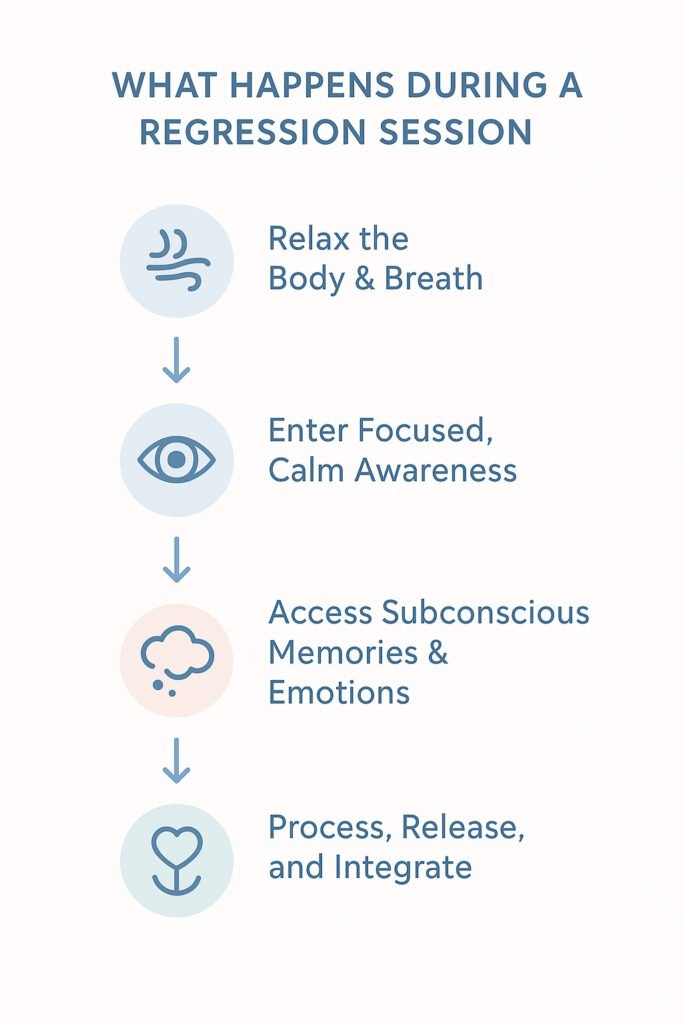
A past life regression session usually begins with a relaxed conversation about goals and concerns. I help the client identify specific emotions or fears they want to understand. This sets a clear intention before entering a hypnotic state.
Next, I use gentle relaxation and guided imagery to bring the mind into a focused, calm awareness. The client stays conscious and can speak freely. Many describe the experience as similar to daydreaming or remembering a vivid story.
During regression, images, feelings, or scenes may arise that seem connected to another time or place. I encourage clients to describe what they notice without judgment. Whether these experiences are symbolic or literal, they can reveal patterns linked to present anxiety.
Sessions often last between 60 and 90 minutes. Afterward, we spend time grounding and discussing what surfaced to ensure emotional balance before leaving.
Role of the Past Life Regression Therapist
The past life regression therapist plays a supportive and observant role. My main focus is to create a safe environment where clients can explore their inner experiences without fear or pressure.
I use my training in hypnotherapy to guide the client into a relaxed state and monitor their comfort throughout the session. I avoid leading questions and instead help them interpret what they experience in their own words.
A good therapist also recognizes emotional release, known as abreaction, and knows how to manage it gently. This helps prevent distress and keeps the process therapeutic rather than overwhelming.
I maintain ethical standards by keeping sessions confidential and ensuring clients feel respected and understood at every step.
Integration and Aftercare
After regression, reflection and integration are essential. I encourage clients to write notes or journal soon after the session while memories are fresh. This helps identify emotional patterns or insights that may connect to current anxiety.
We review key themes together and discuss how these insights might influence daily life. I may suggest relaxation exercises, mindfulness, or continued therapy to support emotional healing.
Some clients experience strong emotions or vivid dreams for a few days. I remind them that this is part of processing and that self-care—like rest, hydration, and quiet time—can help.
Follow-up sessions can deepen understanding and reinforce positive change. Integration turns the insights from regression into practical tools for emotional growth and anxiety relief.
Considerations, Limitations, and Scientific Perspectives
I approach past life regression with both curiosity and caution. The method offers emotional insight for some people, but it also raises questions about accuracy, safety, and its place within mental health treatment. Understanding these factors helps me guide clients responsibly and set realistic expectations.
Scientific Views and Debates
Researchers have long debated whether past life regression reveals genuine memories or imaginative experiences shaped by suggestion. Many scientists see the process as a form of guided hypnosis that draws from the subconscious rather than actual past events.
Some studies report reduced anxiety and depression after regression therapy, but these outcomes may result from relaxation, self-reflection, or placebo effects. Controlled evidence remains limited, and most findings rely on small sample sizes.
From a mental health standpoint, I view past life regression as a complementary approach, not a replacement for established therapies. It can promote emotional awareness, yet it lacks the empirical support found in cognitive behavioral therapy or other evidence-based methods.
Suitability and Safety
Past life regression may not suit everyone. People with severe mental illness, psychosis, or unstable emotional states could experience confusion or distress during sessions. I screen clients carefully to ensure they are emotionally prepared and understand the process.
When used responsibly, regression therapy can feel safe and calming. The use of gentle hypnosis encourages relaxation, which may ease anxiety and open space for reflection. However, untrained practitioners or poor guidance can lead to false memories or emotional discomfort.
I always emphasize informed consent and clear communication. Clients should know that regression experiences are subjective and may reflect symbolic imagery rather than factual history.
Emotional Challenges and Limitations
Exploring past life memories can stir strong emotions. People sometimes relive scenes that feel traumatic or deeply personal. I help clients process these reactions through grounding techniques and post-session discussion.
Regression therapy can uncover hidden fears or patterns linked to anxiety or depression, yet it does not replace standard psychological care. Some individuals expect instant healing, but progress often requires ongoing support and integration.
The main limitation lies in interpretation. Since experiences are shaped by imagination and suggestion, I treat them as meaningful stories that reveal emotional truth rather than literal past events.
Past Life Regression for Anxiety
Many people who struggle with anxiety sense that their fears or worries come from something deeper than current life experiences. Through past life regression, I guide clients into a calm, focused state where the subconscious mind can reveal patterns or memories that may influence their emotions today.
During a session, I use gentle relaxation and guided imagery to help you access these deeper layers of awareness. If a past life connection appears, we explore it carefully to understand and release emotional energy that no longer serves you.
Some clients discover that their anxiety lessens after recognizing and resolving these old patterns. Others find that their healing comes from spiritual hypnosis, where they connect with inner wisdom, spirit guides, or angels for comfort and clarity.
Each session is unique and tailored to your needs. The process may include:
- Relaxation and breathwork to quiet the mind
- Guided exploration of subconscious memories
- Reflection and discussion to integrate insights
This approach offers a safe and supportive space to uncover what your soul is ready to heal, allowing you to move forward with greater peace and balance.
